Brussels Council for Multilingualism Brussels Council for MultilingualismConseil bruxellois pour le multilinguismeBrusselse Raad voor MeertaligheidBrüsseler Rat für MehrsprachigkeitConsiglio di Bruxelles per il MultilinguismoConsejo de Bruselas para el Multilingüismoمجلس بروكسل للتعددية اللغويةСовет Брюсселя по многоязычиюConselho de Bruxelas para o MultilinguismoBrukselska Rada ds. WielojęzycznościConsiliul de Multilingvism din BruxellesBrüksel Çok Dillilik KonseyiΣυμβούλιο Πολυγλωσσίας των ΒρυξελλώνBruxelles flerspråkighetsrådBrüsseler MéisproochegkeetsrotBruxelles Flersprogethed RådetCivaka Pirzimaniya BrukselêConsei dal Multilinguisim di BruxellesСъвет по многоезичие в БрюкселРада багатомовності в БрюсселіRada pre viacjazyčnosť v BruseliConsell del Multilingüisme de Brussel·lesKëshilli i Shumëgjuhësisë së BrukselitBriseles daudzvalodības padomeブリュッセル多言語評議会Brüsszeli Többnyelvűségi TanácsCussigiu de su Multilinguismu de Bruxellesבריסל מולטילינגואַליזם קאָונסיל布鲁塞尔多语言委员会Briuselio daugiakalbystės tarybaIl-Kunsill tal-Multilingwiżmu ta' BrussellСавет за вишејезичност у БриселуSvet za večjezičnost v BrusljuComhairle Ilteangachais na BruiséileConselh del Multilingüisme de BrussèlasBryssela giellalašvuođaráđđiBruselako Eleaniztasun KontseiluaBrüsseleskero But-čhibutňikereskero KonsiloConsello do Multilingüismo de BruxelasBrysselin monikielisyysneuvostoVijeće za višejezičnost u BruxellesuBrusselse MeartalichheidsriedBruselská rada vícejazyčnostiBrüsseli mitmekeelsuse nõukoguब्रुसेल्स बहुभाषावाद परिषदبرسلز کثیر لسانی کونسل

Overview

Overview of the first Brussels Multilingualism Week.

100 partners

More than 100 activities. Almost as many partners throughout the region. Nearly 3,000 participants. Brussels' first Brussels Multilingualism Week exceeded all expectations. Coordinated by the Brussels Multilingualism Council with the support of the Brussels-Capital Region and the City of Brussels, it took place from 9 to 14 February in a dozen municipalities and at the Palais de la Bourse.

It enabled thousands of Brussels residents to join in celebrating the impressive linguistic diversity of their city and to reaffirm the importance of multilingualism for its economic dynamism and social cohesion and for the full enjoyment of its cultural richness.

100 partners

A language-friendly school

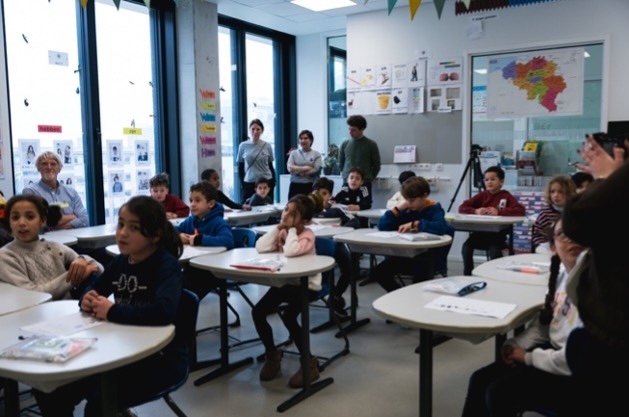
The week began with a visit and a meeting with the press at the Pacheco School, a Dutch-speaking primary school located in the centre of Brussels and holder of the international “language-friendly school” label. This visit provided a concrete example of how to value the pupils’ thirty or so mother tongues and mobilise them as resources for learning the school language.

The Dutch spoken by a Ukrainian pupil in the third year of primary school, who had arrived at the school only last September, was certainly impressive. Equally impressive was the teacher’s commitment and optimism when she mentioned the case of a young Afghan girl who, having never been to school, still had to learn how to use a pencil and with whom she could only communicate through the intermediary of a pupil from another class. The challenge is huge – even more so, in Brussels, for a Dutch-speaking school than for a French-speaking school – but the enthusiasm and resourcefulness of a team of teachers can rise to it.

A language-friendly school

Five major immigrant languages

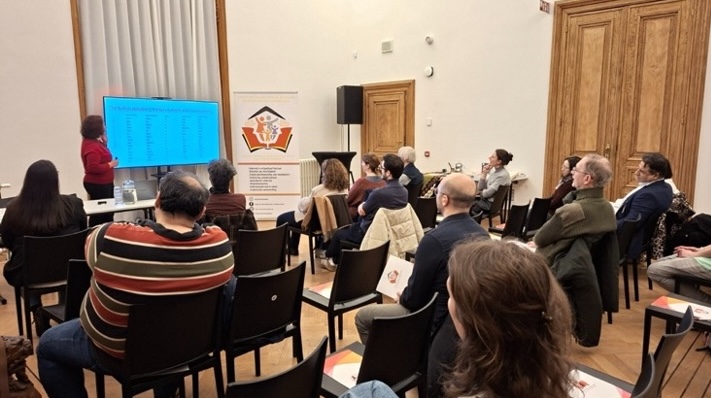
Throughout the week, most of the activities were organised by partner organisations on their own premises, but several took place at the Palais de la Bourse. In particular, every evening of the week provided an opportunity to discover, often in playful manner, one of Brussels’ major immigrant languages: Polish, Spanish, Turkish, Romanian and Arabic.

Five major immigrant languages

Forty stands

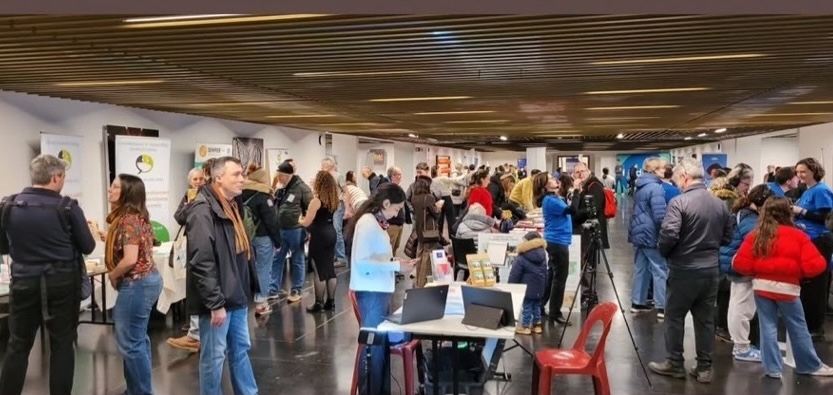
On the closing day, the Bourse hosted around forty stands. The European Parliament was able to show how translation and interpreting work today in the most multilingual institution in the world. Actiris, the VDAB and Bruxelles-Formation explained what they are doing to improve the language skills of job seekers.

Many other associations, schools, universities, adult education institutions, cultural centres, etc. illustrated what Brussels has to offer to improve the multilingualism of its inhabitants — including under-used resources such as the Brulingua e-learning platform, which is free to use for all Brussels residents, and the vast stock of foreign-language books available in the region's forty or so public libraries.

All participants in the closing day were given a badge on which they were invited to write, in descending order of proficiency, the languages in which they felt able to communicate. Ideally, all conversations were to be conducted in the common language lowest down on the list of the speech partners. It is by practising a language that one becomes more proficient in it.

Forty stands

Four debates

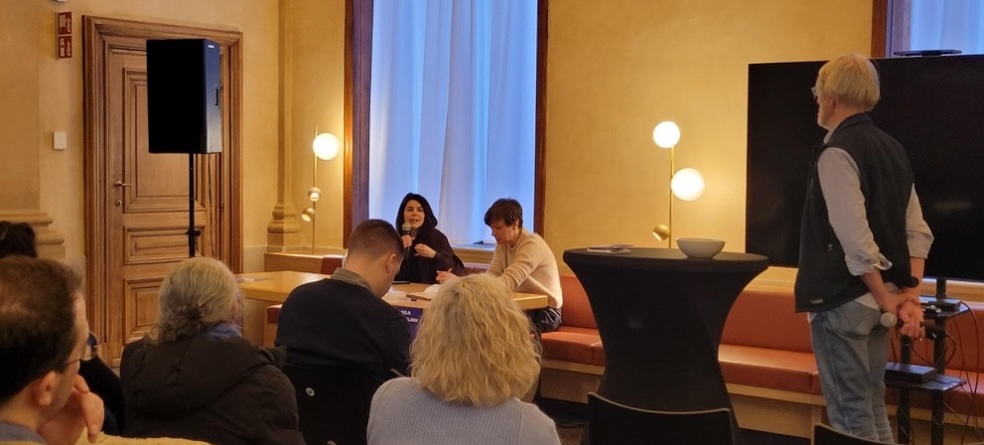
The week was also an opportunity to reflect together on several challenges Brussels faces in promoting multilingualism. The closing day featured four debates.

The first sparked a rich exchange, revealing sometimes opposing views on the impact of artificial intelligence, both on language learning and on the need for translaters and interpreters.

The second illustrated the enormous challenge facing education in Brussels due to the high proportion of pupils who do not speak the school language at home. There was consensus on one recommendation: that parents should do their utmost to pass on a good knowledge of their own native language to their children. The richer this language, the better it is anchored, the easier the learning of the school language will be.

The third debate gave representatives of four Brussels public services— Actiris, STIB/MIVB, Hopital St Pierre, and the CPAS/OCMW of the City of Brussels — the opportunity to explain how the language practices of their organisations have had to deviate substantially from the letter of the 1966 legislation still in force — ie. French and Dutch and nothing else — in order to better achieve its objective: to welcome residents and visitors of Brussels in the best possible way by doing all they can to inform and serve them in a language they understand.

Finally, the fourth debate brought together Ministers Valérie Glatigny (education minister for the Fédération Wallonie-Bruxelles) and Cieltje Van Achter (Minister for Brussels in the Flemish government) to reflect on ways to overcome a major obstacle to achieving a goal they share: whether in Dutch-speaking or French-speaking schools, the shortage of teachers qualified to improve the command of Dutch of Brussels pupils is alarming. The ministers have already taken various initiatives, but the measures announced to improve pupils' Dutch in both Flanders and Wallonia risk making it even more difficult to recruit and retain the teachers that Brussels needs.

Four debates

And tomorrow?

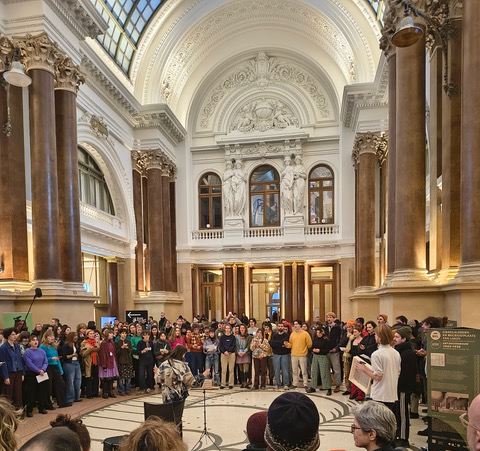
The day and the week ended with a multilingual performance by the seventy singers of the RaveKoor choir in the Grand Hall of the Palais de la Bourse, followed by a reaffirmation of the City of Brussels' strong support by Delphine Houba, Brussels alderwoman for major events: the hosting of bottom-up initiatives of this kind is one of the functions of the City’s superbly renovated Bourse building.

This first Brussels Multilingualism Week coincided with the hectic week during which the Brussels’ politicians finally formed a new government, more than 600 days after the election of June 2024. Unlike its predecessor, this government no longer explicitly includes a minister for the promotion of multilingualism. However, at the beginning of the last chapter of its regional policy statement, it reaffirms its commitment: "Brussels is a multilingual and international region where knowledge of languages is a strategic asset, both for the city and its inhabitants."

We can therefore assume that Brussels Multilingualism Week will continue to receive support from the regional government, in addition to that from the City of Brussels, which sees in the hosting of bottom-up initiatives of this kind one of the functions of the renovated Bourse.

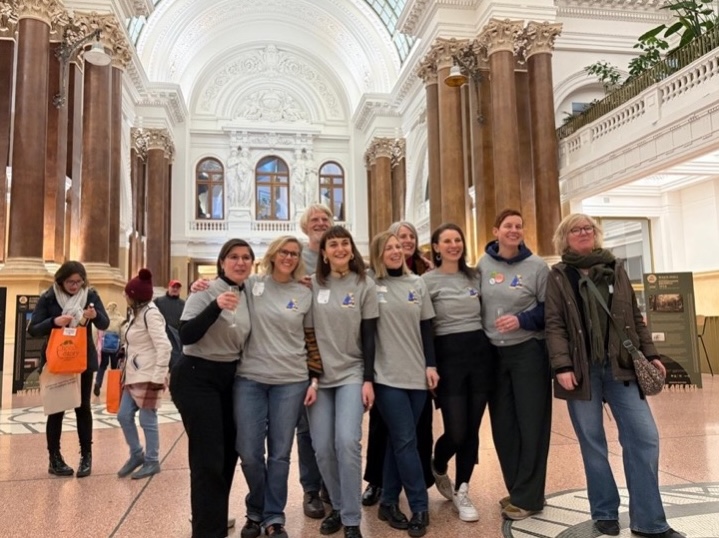
The success of this first Brussels Multilingualism Week certainly bodes well for the future. This success is due to the generous contributions of countless actors in the field who work every day to improve the multilingualism of Brussels residents of all ages and backgrounds. It is even more due to the commitment of a fabulous coordination team, efficient, reliable and enthusiastic up to the end. See you in February 2027 for a second edition!

The Brussels Multilingualism Council

And tomorrow?